Ruth Pauline Prutsman
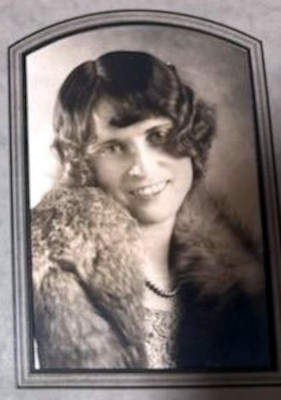
1906 - 1997
A Brief Autobiography
As told to Warren N. & Gerry McNabb,
Summer of 1989.
I was born in Walla Walla, Washington. My parents met and were married in Texas but moved to Washington after my older brother, Charles, was born. All of my father's family had been living in Texas and they all moved to Washington. Most of them settled there.
When my mother and father moved back to Texas, I was three years old. We came on a train. Earl, my brother, was a year old. He threw his shoe out the window. They had windows on the trains then. I can remember one of the brakemen or trainmen threw it back in. We made that trip back to Haskell County. That's where mama's family lived. Her dad was still living and her brothers and her sister also. Those were the Wrights. And mama was so homesick; she was just a kid herself. She didn't like it out in Washington. My dad had a good job there. He drove a Streetcar. All the rest of the Prutsmans stayed there.
We left Haskell county after my brother Lloyd was born, he was just a baby. I was about five. We came in this wagon train. It was a wagon train of three or four wagons. We went to Ochiltree County. No town was near there. It was off of the railroad, near Glazier, Glazier was on the railroad. The towns of Texhoma, Guymon and Glazier was on the railroad.
We moved into a half dugout house and my dad went looking for work. He got acquainted with this Mr. Simmons and he had a farm out in the country. Probably twenty miles from town and he had had a good wheat crop. We moved out there to this farm. Part of the house was filled full of wheat. My dad freighted that wheat because he always had good horses. He freighted that wheat to Canadian to sell it.
We didn't have much to eat that winter except the wheat that was stored in the other rooms of that house. Mama would grind it by hand and cook it up like bulgur wheat. She fixed it in other ways too.
I remember once when we lived in Haskell county, before Lloyd was born, I wasn't even five years old, we went in a wagon to a county fair at Stamford. All I can remember about the county fair was that I got the first store bought ice cream I had ever had, It was in a cone. Of course we had had home made ice cream before, but the thing I remember is eating ice cream in a cone.
When it came spring we were still there. We moved over to another place, some people owned, that was in Ochiltree County. They wanted somebody to live there and farm and we lived there a couple of years. Then the owner sold it or something happened or maybe my dad got a better offer from this man Dodson that had this place where I practically grew up over there just five mile from the Black's School House. With one exception, we stayed there until after I got out of high school. Then I moved to town and got me a job. I went to Black's school house. A two room school house. It just started out as one room and then they built a new school house with two rooms. They were getting more people around in the county.
The exception was when we went to New Mexico looking for land to homestead. In those days you heard about things by word of mouth. My dad got discouraged on the farm and heard about land available for homesteading in New Mexico near the town of Cuba (in the Jemez Mountains). There was quite a bit of land around Cuba to be filed on for homesteads. So he decided he would give up this farm job he had. He got a percentage of the crop every year. I suppose he had saved money. And we just left everything and took what we could. You didn't have much furniture then, people didn't. Maybe some homemade furniture, just beds, straw ticks. So anyhow, we had two wagons trailed together. Mama drove the little cook shack wagon where we cooked; it had a heater in it. She cooked and we had our meals. I think me and one of the other kids slept in there. We had three wagons. Two of them trailed together and the little cook shack wagon and we started to Cuba, New Mexico.
So, it took quite a while, and in between we got to Bernalillo (New Mexico). And you know, that road from Bernalillo to Cuba it was "Pure-Dee" desert. And we got out in there and got lost, and no water and we almost didn't make it. But we finally got to a spring, I don't know what (the name of) that spring was, not too far from Cuba, where there was water. And we met up with some Mexicans. But when we got on up to Cuba and we got out to this, uh, land that was for homesteading my dad knew several of the families that had moved out there and homesteaded. They was a cutting posts and selling posts for a living. It was, like, pinion and ceder country.
But, you know, my daddy had been on them plains where they raised that wheat clear up to your knees and he just couldn't see cutting fence posts for the rest of his life. And no schools, so we left and we went on to, uh, Colorado to the San Luis Valley. He didn't file on any of the land in New Mexico, you have to live on it to prove it up. He just didn't think you could make a living there. And raise kids, with no school there.
So we left and went on up in the San Luis Valley (in Colorado) and after working in the forest for awhile, he (later) got a job in the potato harvest. He found a job working in the forest before we got on up in the San Luis Valley. He worked at (a town named) Russell. We stopped at Russell to buy groceries and they was hiring men for skidding logs out of the mountains not too far away. There was a camp up there. The Trenchera Lumber Company. A big outfit. They had the commissary there. So he just hired out. He had his horses. And we went up there and stayed all summer. But when it come winter, that shuts down. So that's when we wenton the San Luis Valley for the potato harvest, then through Monte Vista and on up into Pitken, to work in the mines. He worked up in the iron mines that winter and then in the summer he skidded logs, working in the timber again.
We went to school there in Pitken and stayed all winter. He worked in that mine. We was snowed in, you couldn't get out, except, maybe by the train. There was a little train that ran most of the time in the winter. We had a little log house in Pitken. A three or four bedroom log house. And that's the winter that everybody got the Spanish flu; the swine flu. And no doctors or nothing, you just lived or died. Mama almost died. She got it in her lungs and always had emphysema after that.
Then when it come spring he went back to work in the timber. And he had an accident, just about killed him. He broke both legs. So that was the end of the log business. He had this load of logs, to skid them down. He had them on a wagon and the brake lines broke, or something, and it just run off with him, off the side of a mountain. I don't know if it killed his horses or not. I think they had to shoot some of his horses. He had four, two teams. Charles helped him. But Charles either wasn't on the wagon or jumped off or something. So they took my dad over to Salida to the hospital, on the train. And he was over there in the hospital. The timber company hospital over there in Salida. And he finally got able to come home and then soon as he was able, by the end of that summer we went back to Texas. We had been gone about three years.
He went right back to the same job he had left three years before. He just run this farm for these guys. They was good landowners and they did right by him, I suppose. When we had a good crop, we had money. When we had a drought or got hailed out, we lived on credit. This guy would loan him money. The landowner would loan him money to get by through the winter because my dad was a good farmer.
When I moved into town to finish high school, I lived with the family of my friend, Toots Hays. They owned a soda fountain, a "confectionary" they called it then, and Toots and I worked there. It had just ice cream and tables, old fashioned tables. Toots and I ran it. I worked there a year or so and then I got a job at the newspaper office, The Spearman Reporter. It was a weekly paper and I think it's still there. That's where I stayed, I wasn't about to go back to that farm. There was no future at all on the farm.
After we got out of high school, Toots and I went to Oklahoma University for a year, two semesters. My dad made a good wheat crop and ... I don't know why we went to Oklahoma University, we didn't know much about college but we knew somebody that was going there. A friend of ours. Her family moved there so she could go there. We went a year and I've still got all my credits. But then I couldn't go anymore. I couldn't go another year, my dad didn't have the money due to a poor wheat crop. I could have got a certificate to teach after two years but I had to go another year (to qualify).
I went back to work for the Spearman Reporter until you dad came along and whisked me away. His folks had moved back to Spearman, from Guyman, Oklahoma, because there was a big land sale going on and his father was in the real estate business. Your dad had been in Montana and he came back to work with his dad in his real estate business. And I don't know, we just went to basketball games and things like that. He had a good car. He was good to take me and Toots and who ever else wanted to go to Guymon, Oklahoma for basketball games. We played Guymon and Perryton. The roads were all dirt and we would get stuck in the mud. I can't believe I've lived through things like that. Your dad and I met in 1923, when the oil boom hit the Panhandle, that was two years before I graduated from high school in 1925.
My parents split up after your dad and I were married. Mama's health got so bad. And like so many men when they get into that age, they need a younger wife. He (my dad) just made an ass of himself. I was so ashamed of him. I never wanted to see him again. He had bought a quarter of a section of land there next to this farm where we had lived. This Dodson farm. He bought a quarter section of land after one of his good wheat crops. And had it paid for. But then he got the "big eye." So he traded it in on a section of land. It had a big two story house on it. Then things went bad again. The depression hit. And he sold it and bought some kind of ... well, somebody really gave him a snow job I guess, and he traded that land in, with the big house on it, for a business building in Borger, Texas. Borger, that town was booming then. So then he had built a house there in town, there in Spearman. He built that, so Mama could take us kids and go over there and live and the kids could go to school. Well, I was already out of school and on my own by then. And I don't know ... this other woman quit her husband, and her and my dad got married but they didn't stay married. And finally my dad went back to Washington. Earl, my brother, had already gone back to Washington. He (Earl) just wanted to go back ... there wasn't much going on there in the Texas Panhandle during them depression years. So he had to go someplace to make a living. So he moved back to Washington. And he (Earl) was married and him and his wife went back to Washington. And Lloyd and his wife (Mattie) stayed there (in Spearman) and toughed it out. And then the war come on and Lloyd got drafted into the Navy and went to war. And anyhow, my dad, he had made such an ass of himself and made such a mess of his life, so he went to Washington where Earl was. And that's where he was when he died in 1960 or 1961.
I met your dad in 1922 or 23. I was still in high school when I met your dad. He was ten years older than I was. He had a Hutson car. I think he had a Hutson, his dad always liked Hutsons. (Warren N. McNabb: Note. I am not sure about my grandfather and Hutson cars. I have been told that he preferred Mercedes and was driving a Mercedes sedan when he was killed in an auto accident in 1937.) Your dad, you know, he was quite the catch. He had money in his pocket, like the McNabbs'. They either had a pocket full of money or they didn't have nothing.
We were just friends for a long time. We would got to basketball games and other things. Your dad always had a good car and he was good to drive us to the games. You dad was a World War I veteran. He lied about his age and joined the army in 1917 and went to France and fought in the war when he was just a kid himself. He had some terrible experiences during the war and they left him with deep emotional scars. Once his family received notice that he was missing in action and presumed dead. He had a hard time settling down after he came back from the war. He traveled around all over the west for several years. He made his money by playing poker, but he was an honest gambler. Your dad never cheated anybody out of anything.
Your dad learned to play poker while he was in the army. Some old man who was a soldier taught him how. On the troop ship returning from France he won the title to a cattle ranch in Montana. He didn't much think this would amount to anything. But, after he got home to Texas and visited his family for a while he went to Montana and claimed his ranch. It turned out to be a real ranch. He bought some cattle and tried his hand at cattle ranching in Montana. After spending one winter in Montana he just about froze. So in the summer he came back to Texas and sold the ranch. He used the money from the sale to buy a car and made himself a homemade camping trailer and hit the road again. The money from the ranch and the poker playing kept him going for several years. In 1923 he returned to Spearman, Texas to work with his dad in the real estate business.
We knew each other a long time. We were just friends. After I came back from the University of Oklahoma we started dating and began to get more serious about one another. We went together for a long time and then decided to get married. We were married May 18, 1930 in Clayton, New Mexico. So we just decided to get married and drove over to Clayton and got married. We eloped.
For a while after we were married, after you and Nan were born, you dad operated the Spearman Motor Company and we lived in a little rent house around the corner. He didn't sell cars, it was a gas station and garage. He went broke by giving farmers gasoline on credit so they could plant their crops. This was during part of the "dust bowl" and all the crops died and nobody paid your dad what they owed him and he went broke.
We went to Sunray (Texas). Your dad thought sure he would get a job. That was an oil boom town then. There was a carbon black plant there. We bought a lot there in Sunray and parked our little homemade trailer house on it. I planted a garden. He did get some jobs painting signs but he couldn't get a steady job. The depression just kept getting worse. And it was summer time and the heat was terrible. Then they had a pretty good harvest over in the wheat country around Spearman so he went over there to work in the harvest. And he worked in the harvest all summer and we stayed there in Sunray.
And when he came back, you kids were both sick and it was hot. And he had made some money. And he said, "Lets just pile the kids in the car and head for the mountains. Lets go to Colorado." Well, I was always ready to go, just give me time to grab my purse. So, that's what we did. We left our little shack there. There were some other people living there nearby. People lived in tents, all around, you know. Nobody had any money.
He had built a little front (porch) on our trailer house and we had a little ice box we kept out there but we could lock the door to the rest of it. I planted a little garden out there. Well, anyhow, we went up through the San Luis Valley. We went though Clayton. We left Sunray and went to Texline. Oh, it was hot, right in the middle of July. But he would stop to paint signs. He would paint signs along the way to keep us in money for gasoline and a little food. We stayed there a couple or three days and he got his sign money and then we just moved on north and we got up there to Colorado.
And we went over the La Veta Pass, we made that trip all in one day through the heat. We got up into the mountains and stopped at the foot of the pass, And there was water running, little creeks everywhere and we pulled up there and camped for the night. And we all took a bath in them creeks and like to froze to death. And then the next day we on over the pass and on in to Colorado. We went to Saguache, at the end of the "Gun Barrel Highway." Your dad got a job at a ranch and worked in the hay all summer. We had a good summer. He would kill cotton tails and I would fry'em and fix cornbread. You and he and Nan would eat them. I wouldn't eat them, but I'd eat the cornbread. I cooked on a campfire all summer. We just camped out there, it was so cool and so good to be out of the heat. That was when dirt (storms) was covering up the Texas Panhandle, we just couldn't do nothing there.
And when that was done, we went on over to Canyon City and picked apples until they was all done. And then we didn't have nowhere else to go, so we went back to Spearman. Nan was old enough to start to school that fall.
Sometimes, on weekends, we would go to Palo Dura Creek and have a picnic. It wasn't far from Spearman. We'd make us some homemade ice cream using two buckets. We would put the ice and salt in a water bucket. And we had a syrup bucket. You would put the syrup bucket in the water bucket that had the ice and salt in it. You would have to turn the syrup bucket for a while and then take the top off and stir it and scrape the frozen cream off the sides until it was all frozen. We would just lay in the shade and eat ice cream and what ever else we had to eat. Your dad would read the Sunday edition of the Denver Post. He would make willow whistles for you and Nan. We always had a good time.
Warren N. McNabb: This is the end of my mother's narrative. We lived in Spearman, Texas for several years after the first trip to Colorado, My dad never found a steady job during the depression. We returned to Colorado to work the hay harvest another summer, in 1940, My folks worked the apple harvest in Colorado again on the way back home to Texas. I cherish the memories of this trip. I had a great summer. I was old enough to go fishing with a willow pole, get lost in the woods and generally have a wonderful time. It was, however, my last great adventure for many years. I started to school in the first grade that fall.